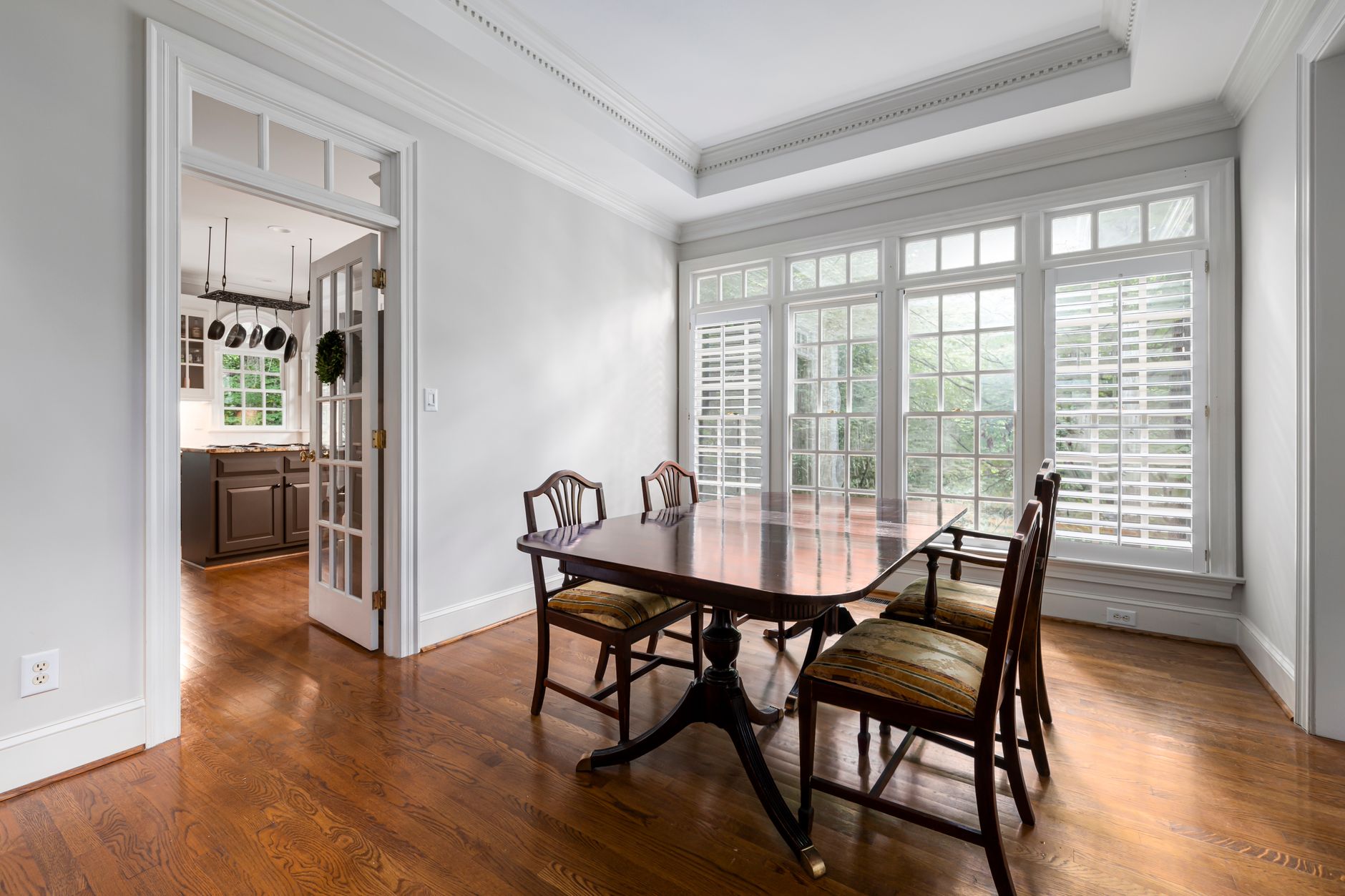
No. Sanding a cupped floor before the moisture source is fixed almost always backfires. The sander levels the raised edges while the board is still swollen, and once the wood dries back down to normal moisture content, the center of each board — the part that got shaved flat — ends up lower than the edges. That’s a crown, and it’s permanent without another full sanding.
Cupping is wood telling you the truth about what’s happening underneath it. The face of the board is drier than the underside, so the underside expands more, and the edges lift relative to the center. Sanding treats the symptom while ignoring the cause. Fix the cause, let the board relax back toward its normal shape, and only then decide whether sanding is even still necessary.
What actually causes a cupped floor in Tennessee?
Most cupping here starts underneath the house, not inside it. A vented crawl space pulls in humid outdoor air, that air sits close to its dew point against cooler floor framing, and the underside of the subfloor and joists stays damp for months at a time even when the living room upstairs feels perfectly dry.
Nashville summers commonly run near 65% outdoor relative humidity, and a vented crawl space tracks close to that outdoor air rather than the conditioned air above it. Wood flooring starts to cup once its moisture content climbs past roughly 19%, and a crawl space that stays above the 55% relative humidity target for weeks at a stretch will get a hardwood floor there eventually. The mechanism is covered in more detail on the crawl space humidity number that decides floor survival, and the general cause-and-effect is laid out at why hardwood floors cup in Tennessee’s crawl spaces.
This is not an old-house problem specifically. It shows up in a 1987 Nashville build as readily as in a pre-1940 one, because the crawl space doesn’t care what decade the house was framed. It’s a humidity problem with a wood floor on top of it.
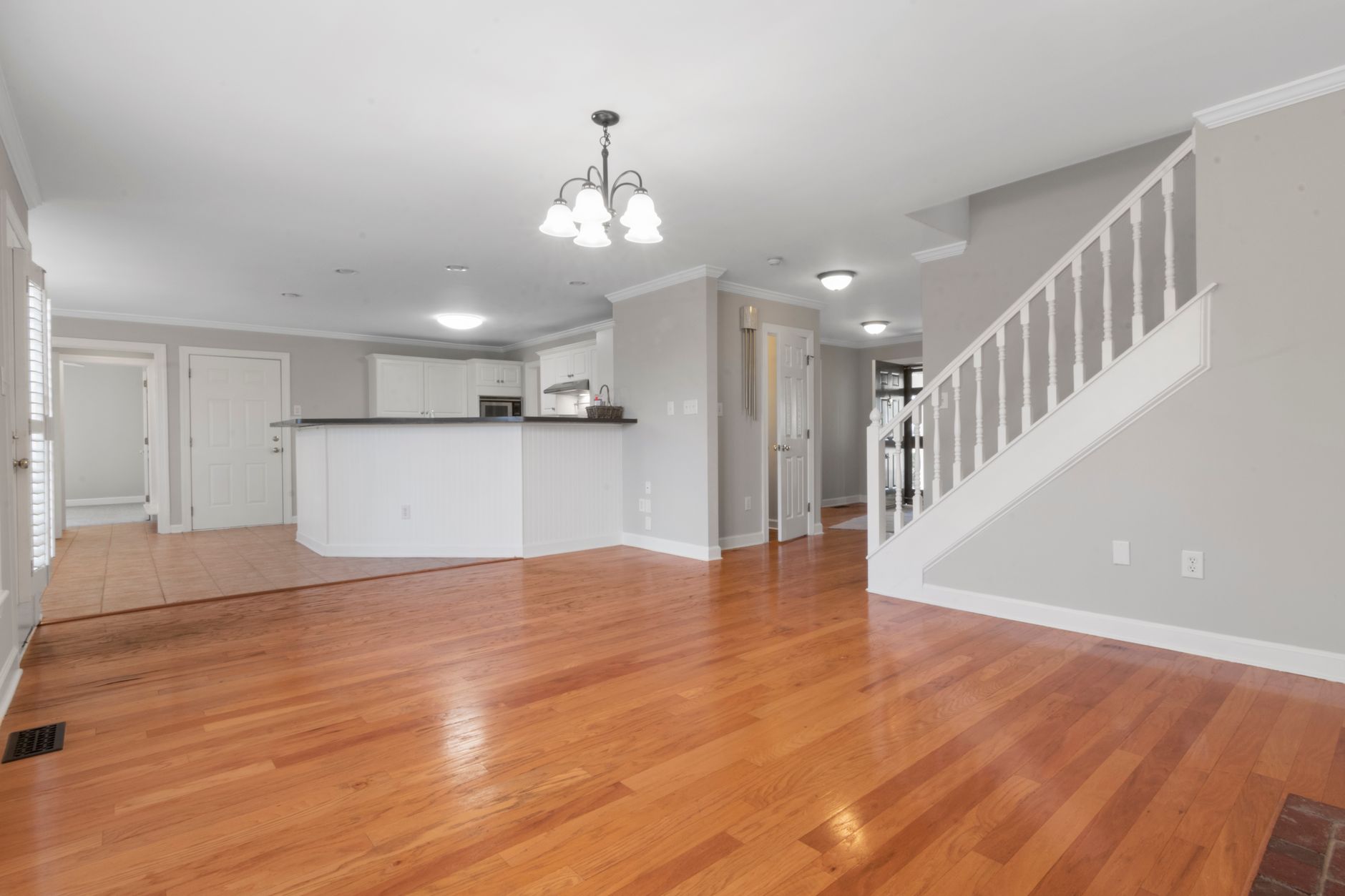
Why does sanding a wet floor make it worse?
Sanding removes wood from the highest points of the board. When a board is cupped, the edges are the highest points, so a sander leveling that surface takes most of its material off the edges and very little off the center.
That’s fine as a fix only if the board’s shape at that moment is its permanent shape. It isn’t. Once the moisture source is corrected and the wood dries back toward a normal 6-9% interior moisture content, the swelling that pushed the edges up reverses. The edges shrink back down — but they were already sanded thin. The center, which was never touched, is now the highest point. The floor has crowned instead of cupped, and there usually isn’t enough wood thickness left to sand it flat a second time without going through the finish layer entirely, or in a thin-wear-layer engineered floor, through the veneer itself.
This is the specific trap the site sees mentioned most often: a floor gets sanded once because it’s cupped, looks fine for a season, then crowns as the house dries out heading into fall. The fix at that point is often replacement, not another refinish.
How long does a cupped floor need to dry before sanding?
There’s no fixed calendar number — it depends on species, board thickness, and how long the wood was overexposed — but the standard approach is to keep monitoring moisture content with a meter until the reading stabilizes and stays stable for at least a couple of weeks after the source is corrected.
“Stabilized” means the boards have stopped moving in either direction, not just that the cupping looks less obvious. A flooring moisture meter checking both the face of the board and, where accessible, the subfloor underneath gives a real number instead of a guess. Until both readings sit in a normal range and hold there, sanding is premature no matter how flat the floor looks on a given afternoon.
Mild cupping — under about 1/8 inch of height difference across a board — often relaxes back close to flat on its own once the crawl space or plumbing issue is corrected, with no sanding needed at all. Sanding is a tool for cupping severe enough, and stable enough, that the floor won’t recover its own shape.
What has to happen before sanding is even considered?
The moisture source has to be identified and corrected first. That’s a diagnostic step, not a flooring step, and it usually points to one of a short list of causes:
- A crawl space running above the 55% relative humidity target for extended periods, often without a vapor barrier over the dirt floor or without mechanical dehumidification
- A plumbing leak or slow drain leak directly under the affected boards
- A grading or gutter problem pushing rainwater against the foundation near the crawl space vents
- A new concrete slab or recently poured patio still releasing curing moisture nearby
Felt paper under the flooring does not solve any of these. It’s designed to reduce squeaks and minor subfloor imperfections, not to block vapor moving up from a humid crawl space — a point covered directly at does felt under flooring stop cupping. A floor installed over felt in a humid crawl space will cup exactly the same as one installed without it.
The crawl space itself is usually the place to start looking, and the crawl space flooring hub covers what a vapor barrier, sump pump, or dehumidifier setup typically involves before a floor is touched.
What does refinishing cost once the floor is stable?
Once moisture content is confirmed stable, refinishing an existing hardwood floor generally runs $3 to $8 per square foot. That range covers sanding, staining if needed, and a protective finish coat, and it swings based on the number of coats, whether the stain color is changing, and how much hand-sanding tight corners and stairs require. These are planning figures for scoping the job, not a quote — the final number depends on the specific floor, its condition, and the contractor doing the work. The flooring cost estimator can narrow that further once square footage and finish choices are known.
If the cupping turns out to be severe enough that boards are cracked, badly crowned from a prior sanding, or delaminated in the case of engineered flooring, replacement rather than refinishing becomes the realistic option. Installed hardwood generally runs $6 to $21 per square foot depending on species, width, and finish, and removing the damaged floor first typically adds $1 to $4 per square foot. Both figures are ranges for planning, not fixed quotes, and both depend on the reader’s own project specifics. The flooring cost hub breaks these ranges down further by material.
Should a cupped floor be replaced instead of sanded?
Sometimes, yes — particularly when the cupping is severe, the boards have already been sanded once before, or the moisture exposure was long enough that the wood has started to crack or cup unevenly from board to board.
Engineered hardwood is less forgiving here than solid hardwood, because the wear layer that can be sanded is thin — often 1 to 3 millimeters — and a single aggressive leveling pass can remove most of it. A solid hardwood floor typically has more wood to work with across its lifespan, which is part of why solid strip flooring tends to survive a cupping episode better than a thin-veneer engineered product in the same crawl space conditions. Where a floor has already been sanded down close to its wear-layer limit, replacement is usually the more durable answer even though it costs more up front.
None of that decision should be made while the floor is still actively cupped. Both sanding and replacement decisions depend on knowing the floor’s final, stable shape, which only shows up after the crawl space or plumbing issue has been corrected and the wood has had time to respond.
What rooms make cupping worse, and where does hardwood not belong?
Hardwood over an uncorrected humid crawl space is going to cup regardless of the room above it, but the risk compounds in spaces with their own moisture load — a laundry room over a crawl space, a mudroom near an exterior door, a kitchen with an under-sink leak that goes unnoticed for months. In those rooms, the wood is fighting moisture from two directions at once. Solid hardwood in a below-grade basement, or directly over a crawl space that has never been tested for humidity, is a common mismatch that the flooring materials hub covers in more detail alongside where each material is and isn’t a good fit. Tile, natural stone, or luxury vinyl plank generally tolerate humidity swings far better than solid wood, and are worth considering as the replacement material in a room that has already cupped a floor once.
City housing stock doesn’t change the physics. A Knoxville home built in 1974 and a Murfreesboro home built in 2002 both sit on crawl spaces subject to the same regional summer humidity, and both will cup a hardwood floor on the same timeline if that crawl space runs wet. The city-by-city flooring pages cover local housing stock context, but the crawl space test itself is the same test everywhere in the state.
If a floor’s cupping, refinishing, or replacement work involves testing for older flooring materials, asbestos testing is done by an accredited laboratory, and any required permit is issued locally by the reader’s own municipality or county — never by a state office. Verifying both is a next step for the reader to take directly, not something this site or any flooring guide can determine remotely. General repair questions along these lines are covered further in the care and repair archive.
TNFloors is an independent Tennessee flooring resource. We do not sell or install flooring, we do not quote jobs, and nobody from this site will call you. Cost figures here are published planning ranges for Tennessee, not quotes — what you actually pay depends on your rooms, your subfloor and the material you choose, and the final price depends on your project. Photography is licensed stock used to illustrate materials and rooms; it is not work by anyone connected to this site. Building code and permit requirements are enforced locally in Tennessee, so confirm anything regulatory with your own municipality before you rely on it.
Any prices mentioned are indicative only. Tool prices move constantly and vary by market, by retailer, and by whether a kit includes batteries or a charger — check the current price yourself before deciding.
Featured image: Photo by Curtis Adams via Pexels.